

Executive Summary:
The 45-year Saturn-Uranus synodic cycle is the ultimate cycle of industrial and economic evolution. It tracks the synthesis between established structural systems and disruptive, futuristic innovation.
By unpacking the historical alignment of these two forces, we can identify the precise windows where scientific breakthroughs, market collapses, and systemic resets occur.
This report backtests the cycle from the industrial age through to 2021, setting the stage for the massive "Sentient Economy" conjunction coming in 2031.
Key Dates:
March 1897 - the start of our industrial age as we know it.
March 1st, 2026: The expiration of the supportive Saturn-Uranus Sextile - the markets “safety net” begins to withdraw.
June 2031: The Great Conjunction in Gemini - the official birth of the Sentient Economy and AGI.
⏱ A 20-Minute Read
THE SATURN / URANUS CYCLE
Much like the 18.6-year nodal cycle, the Saturn-Uranus synodic cycle is a fundamental pillar of macro-astrology, world history and finance. It serves as a leading indicator for shifts in economic structures, scientific leaps, and the industrial changing of the guard.
The archetypal tension here is clear. Saturn represents the establishment: government regulation, the status quo, restriction, and the entropy of aging systems. It is the time-tested, the solid, and the “old way.” Uranus, at the opposite end of the spectrum, embodies the spirit of rebellion: innovation, technology, volatility, and the futuristic disruption of the new.
When these two forces collide in major aspect, the result is a great synthesis. The cycle governs the transmutation of decaying economic and societal worldviews into modern ones. Ideally, this process is coordinated, where innovation enhances rather than purely destroys, and the avant-garde is integrated into the old guard.
Historically, when these two planets aspect, the world experiences the pleasant and painful growth of innovation. New scientific theories emerge, radical technologies rewrite the rules of the global economy, and a new normal is solidified within the mass consciousness.
The financial markets are obviously, inextricably linked to this process. The layered web of planetary alignment, societal progress, and market momentum is a complex, integrated chain of cause and effect, one that most market participants simply passively observe without understanding the underlying clockwork.
The historical correlation is impossible to ignore. Major structural shifts have consistently emerged during peak Saturn-Uranus aspects:
The Birth of the Industrial Revolution
The Launch of the Dow Jones Industrial Average
The Automotive Boom & Mass Production
Einstein’s Theory of Relativity
The Creation of the Federal Reserve (1913)
The Solidification of the 40-hour Work Week
The Geopolitical Realignment of WWII
Bretton Woods: The Birth of the IMF and World Bank
The Nuclear Age & Cold War Escalation
The 2008 Global Credit Crunch
This synodic cycle lasts approximately 45 years. It begins with the Conjunction and evolves through a series of crisis points and growth phases. There’s the waxing sextile and square, the opposition, then the waning square and sextile before returning to another conjunction.
THE ARCHITECTS OF THE CYCLE
Who first pioneered this cycle as a leading economic indicator? While it remains a hidden tool in the modern analyst's kit, its origins are deeply rooted in 20th-century scholarship. André Barbault, the famous French astrologer, is arguably the most significant figure in this field. He spent decades studying a “cyclic index" of the outer planets, proving a direct correlation between planetary alignments, global stability, and major economic crises.
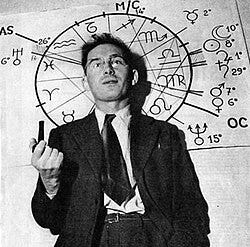
What’s weird is that this cycle of innovation and economic momentum exists independently within the world of sociology and mainstream economics.
The Saturn-Uranus cycle eerily mirrors the Kondratiev Wave, proposed in 1922 by the Soviet economist Nikolai Kondratiev. The Kondratiev Wave identifies long economic cycles of 40 to 60 years (placing our 45-year synodic cycle perfectly within the sweet spot of his data). Kondratiev argued that capitalist economies undergo massive waves of technological evolution, resulting in distinct periods of long-term booms and systemic busts. He famously predicted the collapse of the Soviet Union decades in advance using this exact outer-planet index.
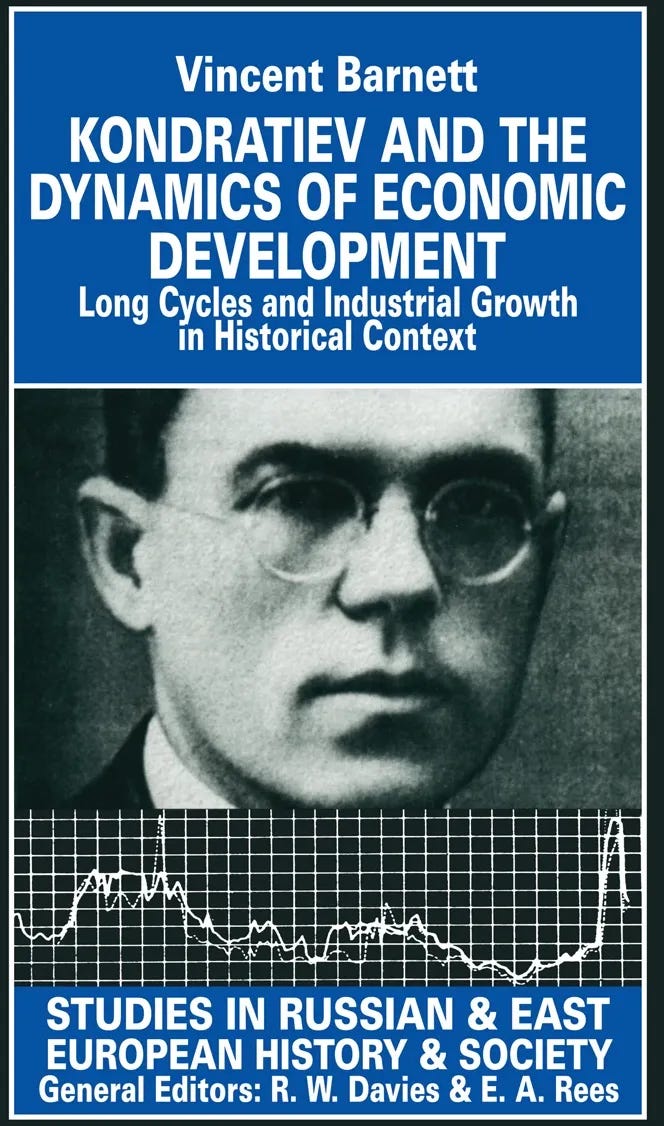
This model accurately tracks the economic, sociological, and technological pulses of the last two centuries. The Saturn-Uranus cycle simply provides the clockwork behind these waves in a bit more detail.
Let’s go into the detail of the key economic events that occurred during the Saturn/Uranus Synodic cycle, and what it predicts about our very near financial future.
THE CONJUNCTION OF 1897 | THE GENESIS OF THE DOW JONES
Our journey begins on January 6, 1897, with the Conjunction of Saturn and Uranus in the intense, transformative sign of Scorpio. This seed point of the cycle coincided with a key formalization of the financial world: the birth of the Dow Jones Industrial Average and the rise of heavy industrial monopolies.
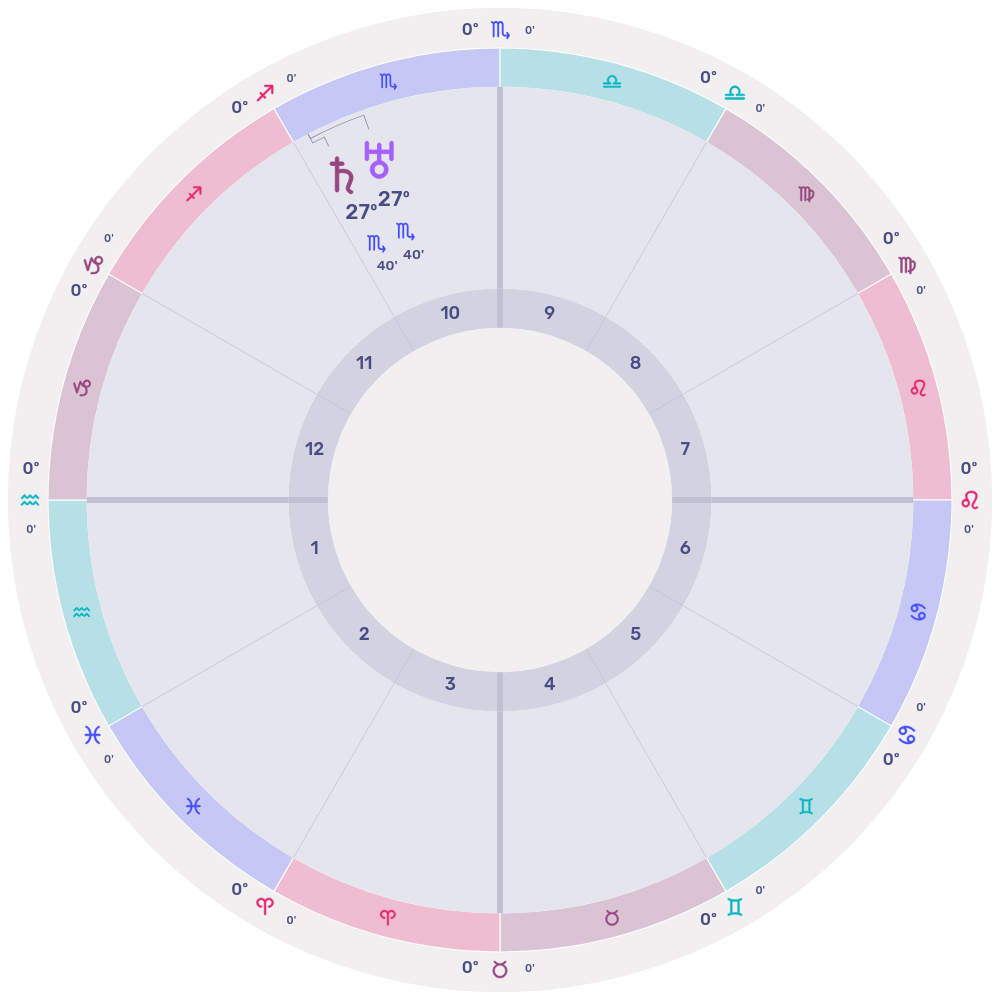
Before the Dow, if you wanted to know how the market was doing, you had to look at every single company one by one. Charles Dow realized that if he took a small group of the most important companies, added their stock prices together, and divided by the number of companies, he’d get a single number.
It sounds simple today, but this was the birth of market psychology as we know it. We shifted from analyzing isolated businesses to understanding "The Market" as a singular, living entity. Saturn provided the structural framework, while Uranus provided the revolutionary perspective.
This era also had a crucial innovation in science, the discovery of the electron. This is the innovative spark (Uranus) into how reality works (Saturn). This made the field of electronics possible, which lead to the computer and the internet. You can see how this conjunction in 1897 seeded the everyday reality we now live in, and just how alien (or, Uranian) our reality would be to people living in those times.
THE WAXING SEXTILE | JUNE 1905: THE APEX OF INDUSTRIAL POWER
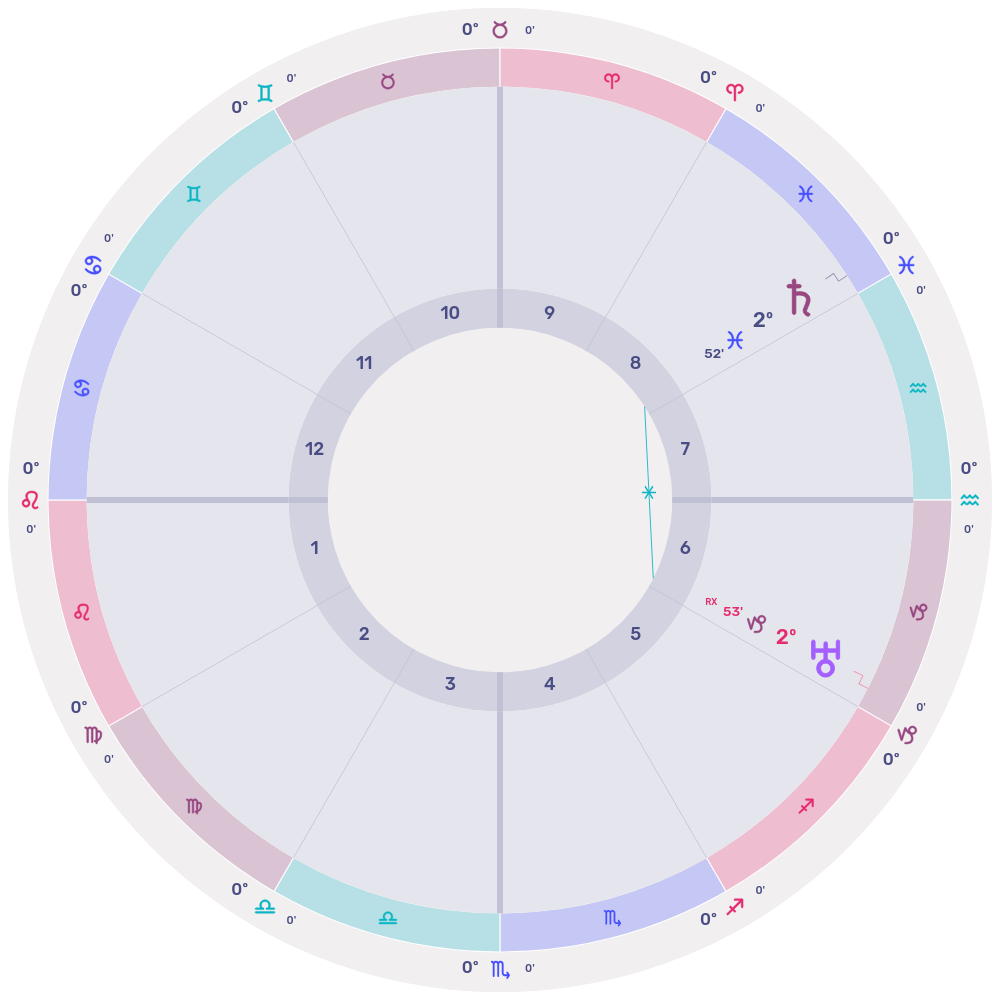
By the summer of 1905, the cycle reached its first waxing sextile, a period of harmonious expansion and the integration of the seed planted in 1897.
This transit coincided with the emergence of Albert Einstein’s Special Theory of Relativity. It is difficult to overstate the disruptive impact this had on science, energy, and the global economy. Einstein provided the ultimate Uranian breakthrough that would eventually lead to the nuclear age. In astrological terms, this was the moment our understanding of reality (Saturn) was forever altered by innovation (Uranus).
Simultaneously, the industrial monopolies that were born during the conjunction, monoliths like U.S. Steel and Standard Oil, had matured. They were no longer upstarts, they were the new establishment.
As the sextile perfected throughout the summer and fall of 1905, the Dow Jones Industrial Average hit 100 for the first time in history, breaking a massive psychological resistance level. This market tear was further fuelled by the North Node’s ingress into Leo on August 24, 1905. As I’ve detailed in my work on the Nodal Cycle, this 18-month window marked a definitive peak in the global economic engine.
THE WAXING SQUARE | JUNE 1909: THE BIRTH OF CENTRALIZED CONTROL
By June 6, 1909, the cycle reached its first point of major friction: the waxing square. This is the moment where the growth of the previous decade hits a structural wall, demanding a reorganization of the system.
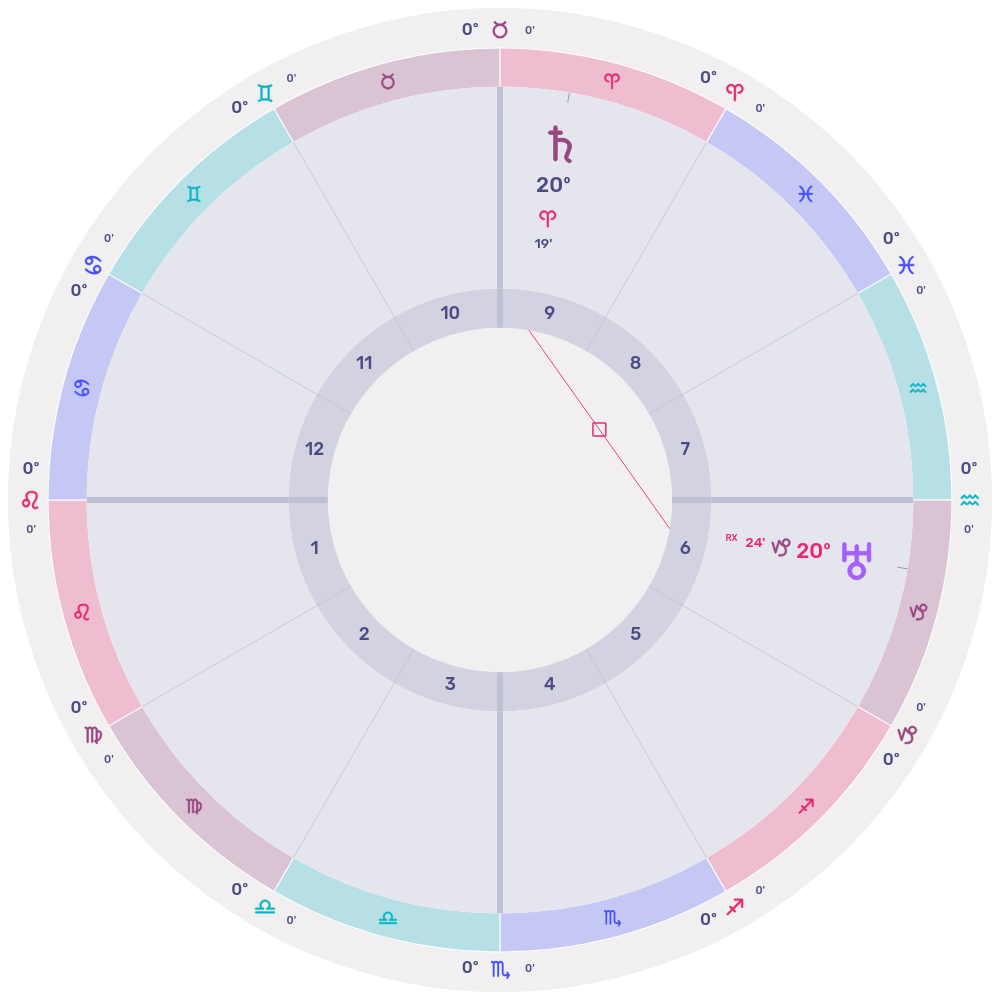
The years surrounding the 1909 square provided the most significant Saturnian restructuring in American history - the road to the Federal Reserve. This was a direct reaction to the panic of 1907. Saturn (the establishment) sought to capture and regulate the wild volatility of the markets (Uranus).
In June 1909, Congress also began the serious legislative work on the 16th Amendment - the Federal Income Tax. This was the ultimate Saturnian maneuver. By pivoting the burden of funding the state from tariffs to a direct tax on the "industrial magnates" who had grown wealthy during the 1897 conjunction, the government solidified its grip on the nation’s wealth.
However, the Uranus spark was not to be outdone. This period saw the mass-market launch of the Ford Model T.
While the car represented technological freedom (Uranus), the assembly line represented the rigid, disciplined structure of Saturn. This combination birthed the automotive age and the modern way of life we rely on today. It was a stressful, volatile period that forced the “old guard” to create new systems of control to manage the explosive potential of human innovation.
THE OPPOSITION | APRIL 1920: THE FORGOTTEN COLLAPSE
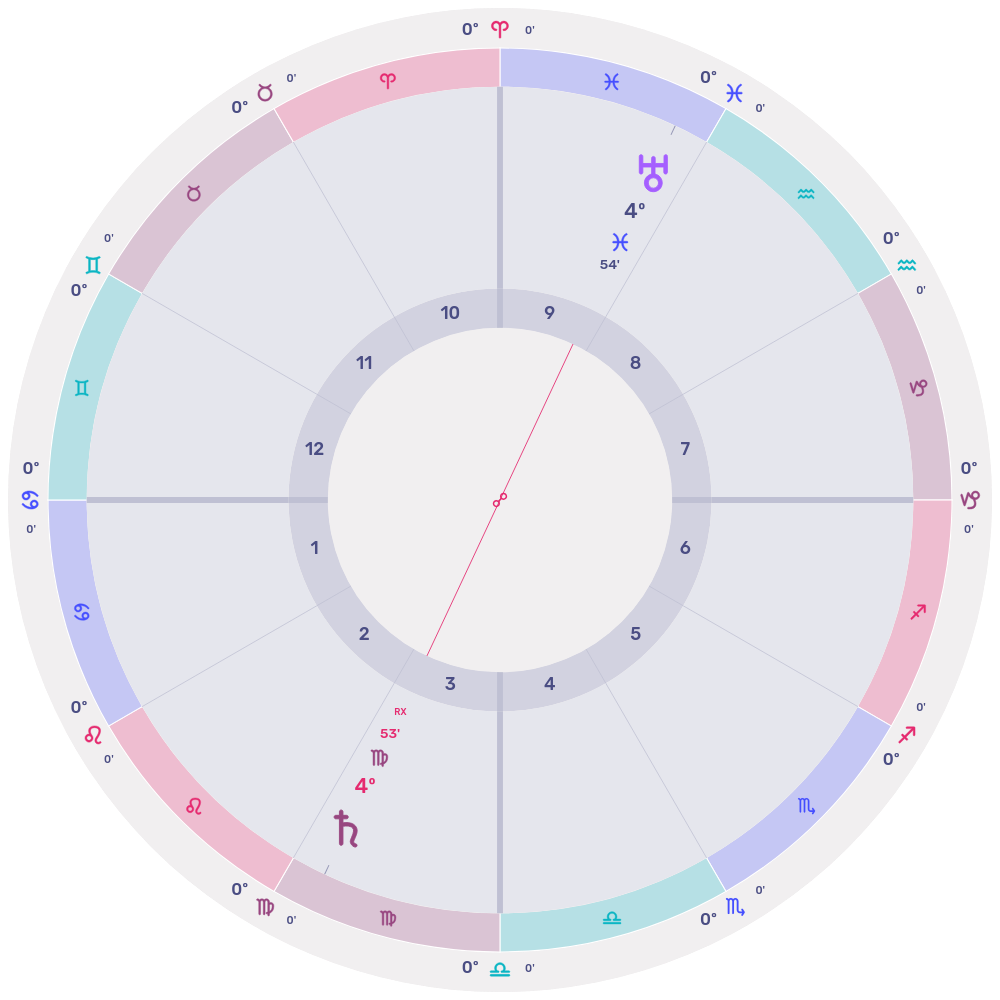
This opposition was tough. It played out against a backdrop of total geopolitical and biological exhaustion. There was the aftermath of World War I to deal with and the tail end of the Spanish Flu pandemic.
During WWI, the economy was on steroids. War is often artificially bullish - government spending reaches astronomical levels, and industrial output is forced into a 24/7 frenzy. However, when the Armistice was signed, the war economy evaporated overnight. Millions of soldiers returned to a domestic labor market just as the government ceased its massive procurement of tanks, ships, and uniforms.
The result was a structural pivot so violent it caused the Depression of 1920–1921. While the 1929 Wall Street Crash dominates the history books, the 1920 collapse was a brutal, 18-month deflationary shock that saw wholesale prices drop more sharply than at any other time in American history. It was a classic Saturnian "cleansing" of the Uranian excesses of war spending.
At the same time ,the Uranus influence manifested through radical social liberation. The Women’s Suffrage movement reached its peak and lead to something that is taken for granted today in modern liberal democracies - which also, whether you like it or not, improved economic productivity.
When all peoples are equal, they are also equal consumers and producers. We really saw this by the time the neoliberal world order of the 1970s began, where true equality meant that everyone had an equal opportunity and obligation to work and consume. This lead to the death of the nuclear family and a much stronger economy, but the majority of the wealth that was created was sucked up to the top 1% over the decades, which is why a modern couple both working full time feel objectively poorer than a one-income household in the 1960’s.
THE WANING TRINE | 1926: THE GOLDILOCKS ERA
The trine aspect is usually the most positive and supportive aspect. And indeed, late 1925 through 1926 represents the goldilocks years of the roaring ‘20’s.
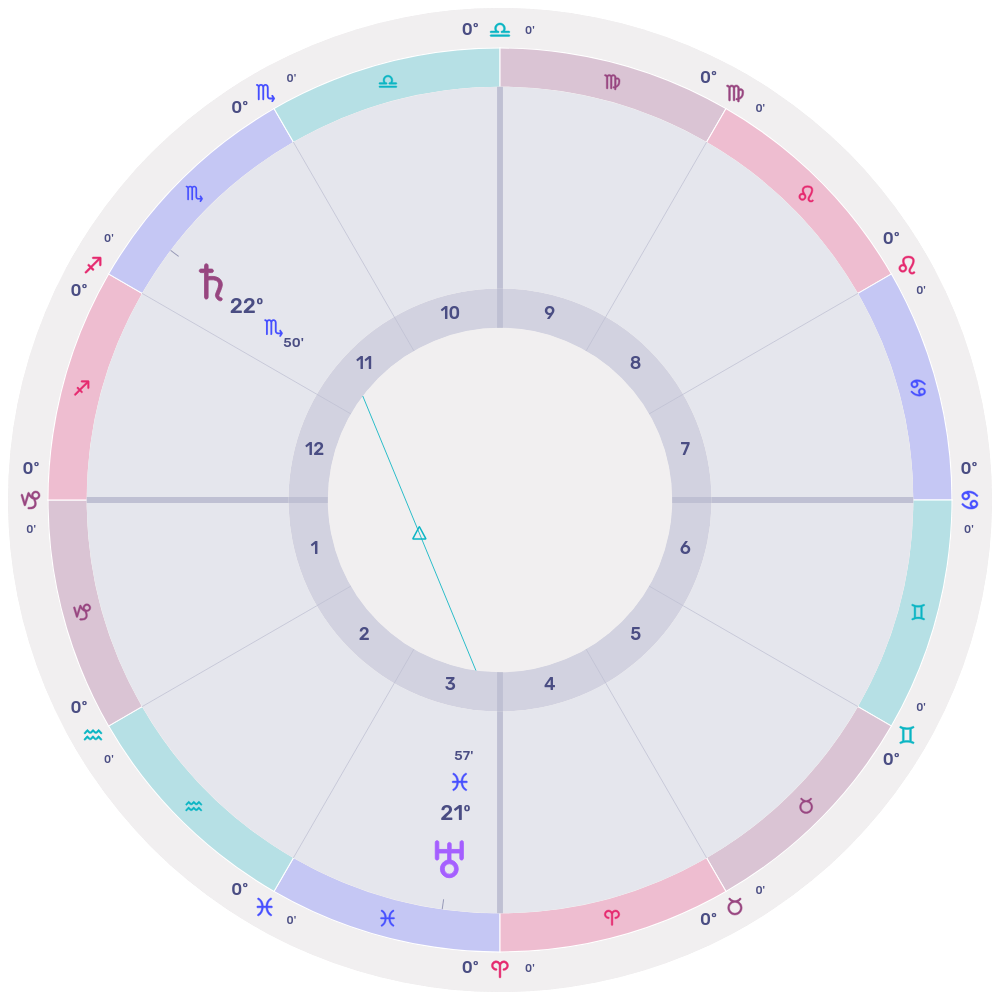
By 1926, the global economy achieved a state of near-perfect equilibrium. Inflation remained low, employment reached record highs, and the U.S. government was running a massive fiscal surplus.
This was the moment the 40-hour work week was standardized -a classic Saturn-Uranus synthesis. Saturn provided the rigid, legal structure of the time-block, while Uranus provided the humanitarian liberation from the grueling, endless labor of the previous century.
It is also worth noting the astrological confluence here. As per the 18.6-year nodal cycle, Rahu (the North Node) was in Leo. As I have detailed in my previous reports, this is the most bullish signal in the nodal cycle. When you overlay the Saturn-Uranus trine with a Leo North Node, you get an economic environment that feels invincible. What could go wrong?
THE WANING SQUARE | 1930–1932: THE DEPTHS OF THE GREAT DEPRESSION
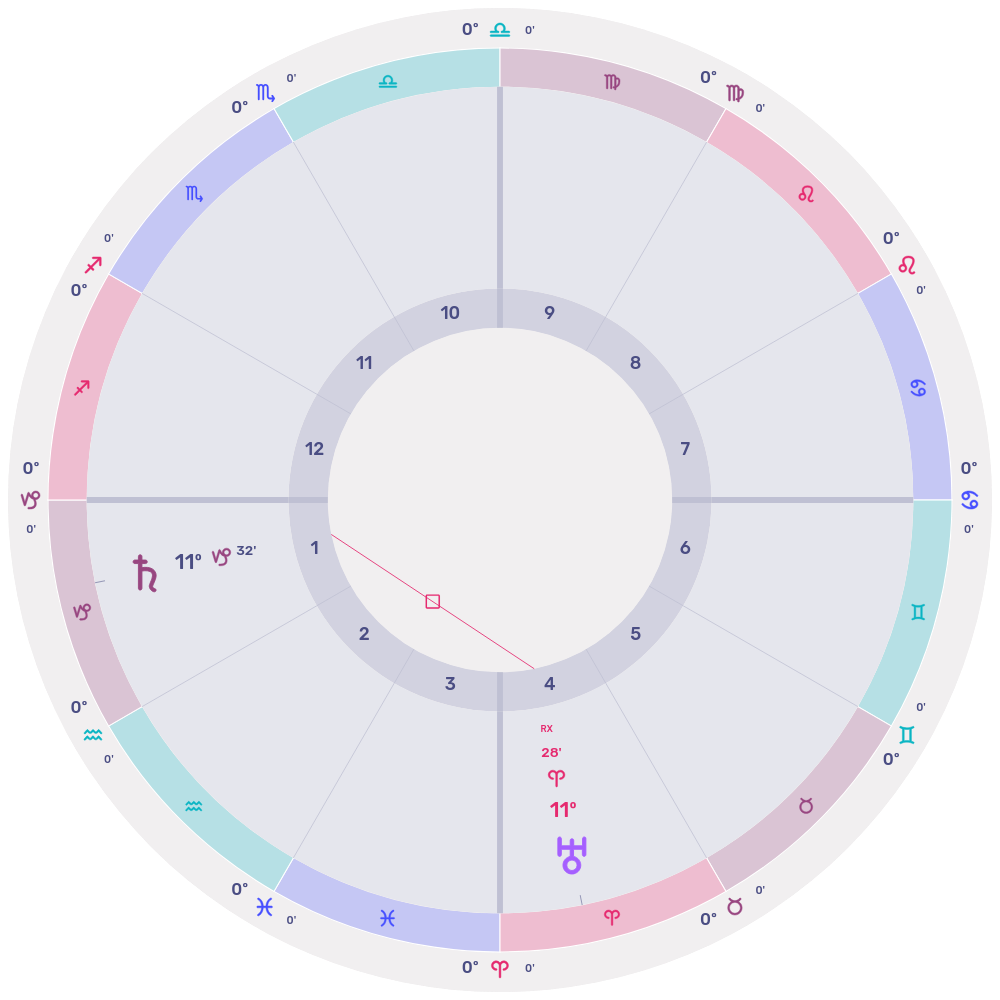
The square once again represents the challenging aspect of the economic cycle. The period from 1930 to 1932 saw the Saturn-Uranus cycle manifest as total psychological and structural paralysis.
While the 1929 Wall Street crash provided the initial shock, it was the perfecting of the square in the subsequent years that earned the Great Depression its name. This was the archetype of high friction bleeding into the reality of everyday life. In December 1930, the Bank of United States failed. It was the largest bank failure in U.S. history at that time, shattering what little public confidence remained.
By the time the square reached its final peak in 1932, Unemployment reached a staggering 25% in the United States and the Dow Jones hit its rock bottom, having lost nearly 90% of its value from the 1929 peak.
This period marked the definitive end of the industrial era birthed by the conjunction in 1897. The system had become too rigid, and the square forced a painful liquidation of the old order to make room for the next Great Conjunction.
THE CONJUNCTION | 1941–1943: THE ATOMIC RESET
This period marked the death of the old world and the seeding of the modern globalist era. The Conjunction represents a fresh cycle of society and changing innovation born out of the absolute necessity of war.
The Manhattan Project perfectly encapsulated this conjunction. The Uranian spark (the radical splitting of the atom) harnessed within a rigid Saturnian structure (the military-industrial complex, maintained under unprecedented secrecy). It was during this cycle that J. Robert Oppenheimer famously invoked the Bhagavad Gita: “Now I am become Death, the destroyer of worlds.”
As a student of Vedic Principles, It’s worth noting the Sanskrit verse does not literally say this. Sanskrit notoriously takes a lot of skill to correctly interpret and translate.
श्रीभगवानुवाच
कालोऽस्मि लोकक्षयकृत्प्रवृद्धो
लोकान्समाहर्तुमिह प्रवृत्तः ।
ऋतेऽपि त्वां न भविष्यन्ति सर्वे
येऽवस्थिताः प्रत्यनीकेषु योधाः ॥११.३२॥This verse translates to “I am time, the mighty destroyer of the worlds, now fully arisen, engaged here to annihilate these worlds; even without you, none of these warriors arrayed in the opposing armies will remain”.
The main mix up is on the key word Kāla meaning time, which can translate to death. That’s why Saturn (Shani) represents both - time, decay and death are inherently interlinked. When Saturn and Uranus conjoined and the bomb was dropped, we found ourselves capable of death on a mass scale we had never experienced in human history.
While the Bretton Woods Conference officially took place in 1944, the planning and the economic urgency for it were forged during the 1942 conjunction. Global leaders realized that to prevent a repeat of the 1931 collapse, they needed a permanent, global structure that capitalized on the war in Europe and America’s relative strength.
This impulse eventually birthed the IMF and the World Bank -the global operating system for fiat money that still dictates our lives today.
Technologically, the Uranian influence was equally potent. We transitioned from chemical to atomic energy. The colossus computer was being built in the UK to crack the German Enigma codes. This was the birth of modern cryptography, something we take for granted in our modern cryptocurrency world.
THE WAXING SQUARE | 1951–1954: THE AGE OF ANXIETY
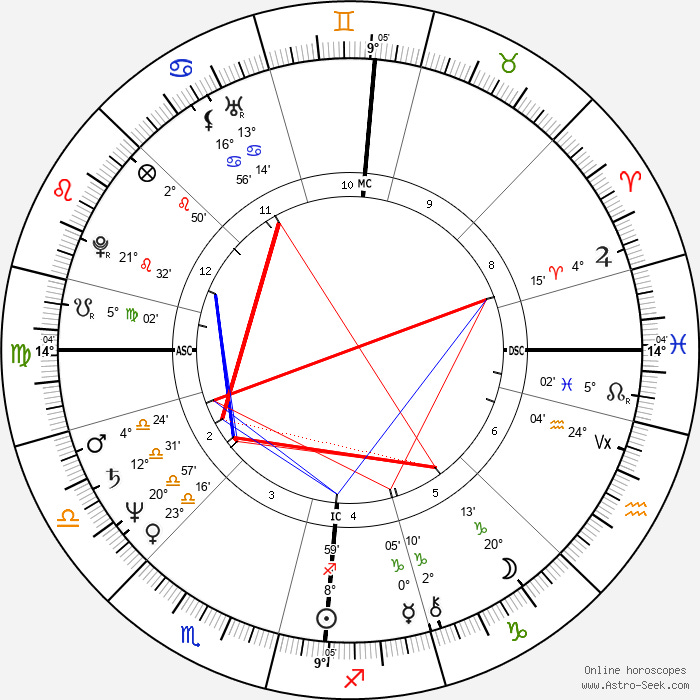
The 1950s waxing square brought the fresh nuclear innovations of the 1942 Conjunction into a period defined the early Cold War.
In 1952, the United States detonated the first Hydrogen Bomb. This was Uranus in its most extreme form - a radical, terrifying release of energy that fundamentally threatened the existence of the planet. The reaction from the establishment was immediate and heavy-handed. This waxing square birthed the Red Scare and McCarthyism - a period of extreme social conformity and political regulation designed to manage the existential dread of the nuclear age.
On the economic front, the first modern credit card emerged in the early 1950s. It laid the foundational tracks for the consumer debt-driven economy that would explode in the following decades
With Uranus transiting Gemini, the sign associated with local travel and communication, we saw the birth of the commercial Jet. Innovation (Uranus) had permanently disrupted travel (Gemini).
Note the historical rhyme here. As we approach the re-entry of Uranus into Gemini in 2026, we are poised for a similar disruption in the automotive and transport sectors. Just as the jet engine replaced the propeller, the self-driving, AI-integrated vehicle is set to dismantle our current understanding of transit and urban planning over the next seven years.
THE OPPOSITION | 1965 - 1967 | THE CULTURAL REVOLUTION
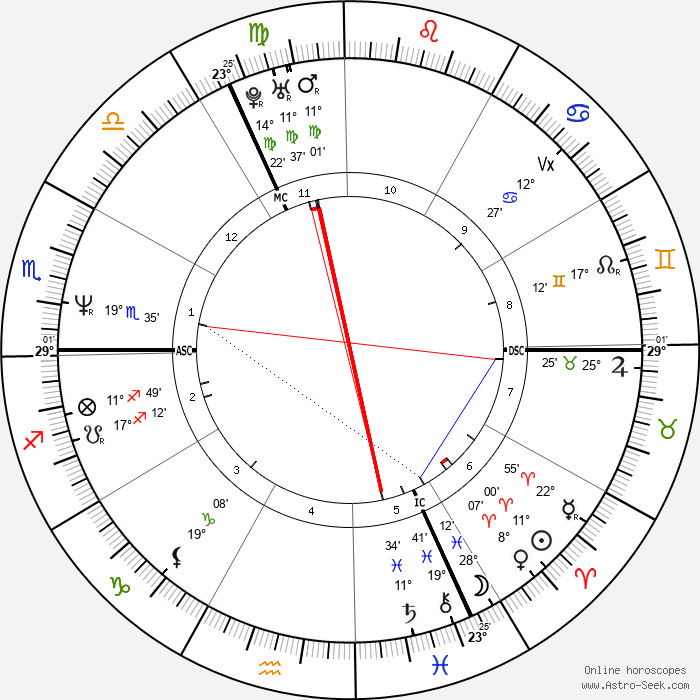
The opposition of the mid 60’s showed that the rigid, conservative structures of the 1950s (Saturn) were directly challenged by an explosive, radical urge for liberation and future-forward thinking by the new-age hippies (Uranus). The counter-culture itself was a Uranian rebellion against traditional social values, corporate conformity, and the military-industrial complex.
Economically, the 1965–1967 opposition marked the beginning of the end for the post-war golden age. President Lyndon B. Johnson’s “Great Society” programs attempted to provide massive social welfare while simultaneously funding the escalating Vietnam War.
This was the beginning of the inflationary pressure that would eventually lead to the collapse of the Gold Standard in the 1970s. The opposition forced a choice: do we maintain the old stability, or do we fund the radical, expensive new world? The attempt to do both signalled the start of a structural decline in the dollar’s purchasing power - a theme we see echoing in our current 2026 climate.
THE WANING SQUARE | 1975 - 1977 | THE PERSONAL COMPUTER & THE NEUTRINO
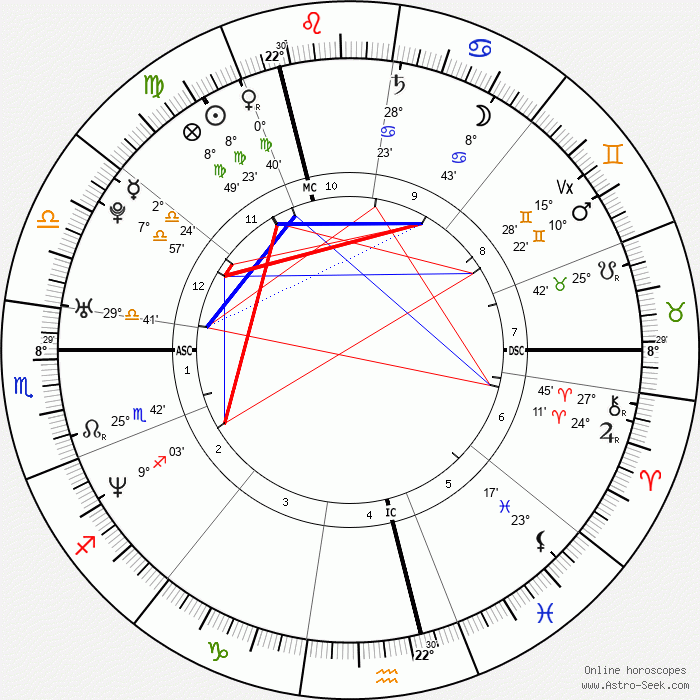
Following the end of the Vietnam War in 1975, the global economy faced a massive hangover. The old Saturnian industrial sectors like steel, manufacturing, and traditional labor were in a state of decay. But within this period of decay, the seeds of life as we now know it were planted. In 1977, Apple was incorporated, and the Apple II was released. This was the quintessential Saturn-Uranus synthesis - taking the massive, institutional computing power of the military and big business (Saturn) and placing it into the hands of the individual (Uranus).
While the general economy was choking on stagflation, a group of innovative, technologically charged rebels in Silicon Valley were building the digital rails that would eventually rescue, and then dominate, the global financial system.
49 years later, Apple is now the 2nd largest company in the world, with a market capitalization of around $4 trillion, larger than the GDP of nations like New Zealand, Finland and Portugal.
THE CONJUNCTION | 1988: THE GLOBALIST BIG BANG
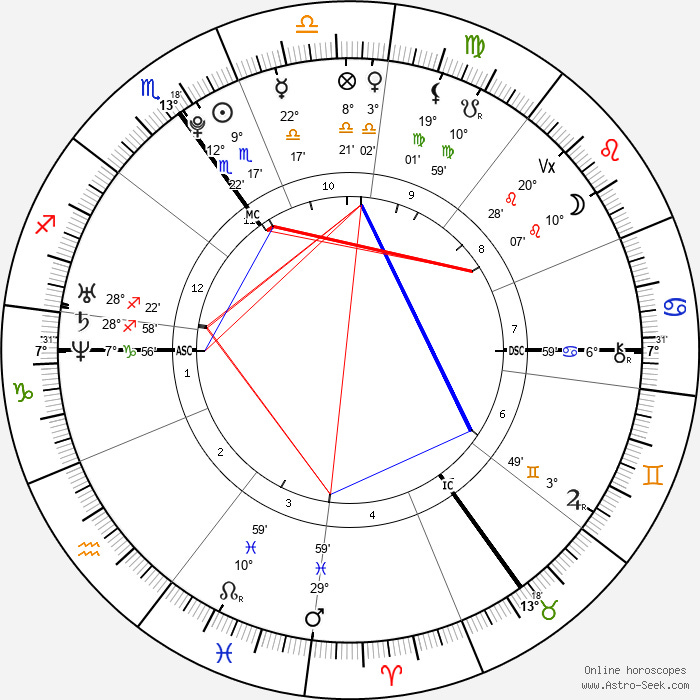
The 1988 Conjunction in late Sagittarius signalled the most significant geopolitical and financial reset since the 1940s. In the sign of Sagittarius, the archetype of long-distance travel, foreign nations, and global expansion, this alignment birthed the era of Hyper-Globalization and the Neoliberal, free-market oriented world order.
This window marked the absolute flourishing of Neoliberalism and global market capitalism. This era saw the rise of the mega-corporation - entities that possessed more capital and power than many sovereign nations. The barriers to trade were being dismantled in favour of a borderless flow of capital.
While the political world was being reshaped, a technological seed was planted that would eventually become the “central nervous system” of the global economy. In 1989, Tim Berners-Lee proposed the World Wide Web.
This was the ultimate Uranian breakthrough. It provided the connectivity and lightning-fast communication rails required for markets to become truly global. Without the Web, the massive expansion of the financial grid and the high-frequency trading world we live in today would have been impossible. The 1988 conjunction linked the human collective mind into a single, synchronized economic machine and created the internet as we know it, which ain’t a small matter.
THE WAXING SQUARE | 1999-2000 | THE DOT-COM BUBBLE BURST
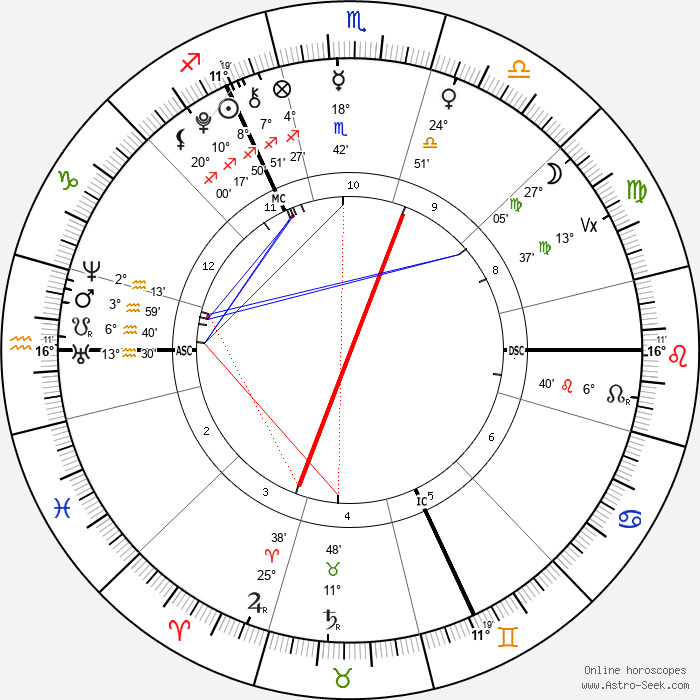
The waxing square is the first major reality check of the cycle. By the year 2000, the excitement of the 1988 Internet seed had grown into a speculative frenzy. This was the point where the digital dream hit the hard ceiling of profitability and sustainable business models. Companies with zero earnings were valued at billions simply because they had a “.com” suffix.
The 1999–2000 square forced a violent crash back to reality. Notice that Uranus was in Aquarius, the planet of innovation and technology in the sign associated with collective systems and the internet. Saturn was in Taurus, the planet of restriction and negativity in the sign of material reality, money and finances.
The Nasdaq lost nearly 78% of its value, serving as a brutal reminder that while innovation drives the future, it must be built on a solid foundation.
The transition into this square was also defined by the retrospectively hilarious “Y2K” panic. The fear that a tiny flaw in the digital code would cause the entire global infrastructure to collapse at the stroke of midnight. While the crash didn’t happen in the computers, it manifested in the markets just months later.
The survivors, companies like Amazon and Google, were the ones that successfully integrated Uranian innovation into a profitable, Saturnian corporate hierarchy.
THE OPPOSITION | 2008-2009 | GLOBAL FINANCIAL CRISIS
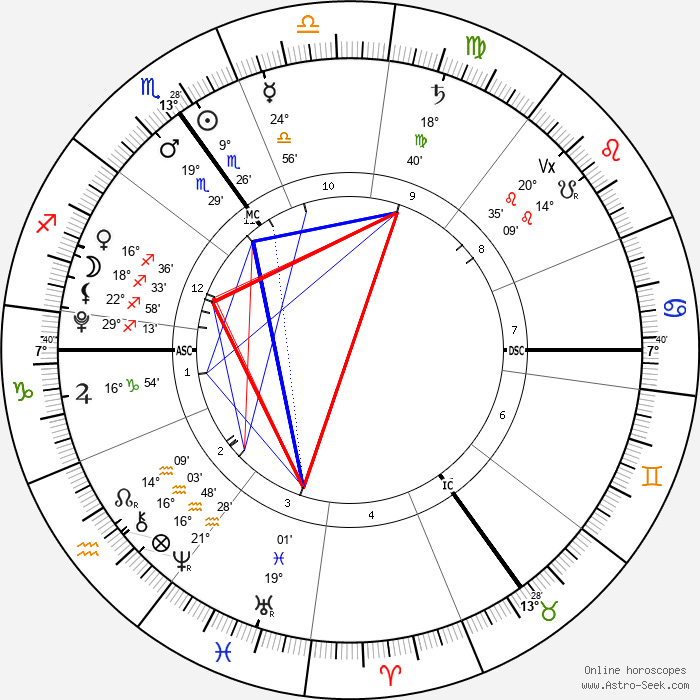
In financial astrology, an opposition represents a point of maximum tension where a system’s internal contradictions are laid bare. This was the moment the Globalist Big Bang of 1988 reached its limit and the financial system faced an existential heart attack.
The crisis was a perfect manifestation of the Saturn-Uranus archetypes. The financial sector had engaged in extreme innovation (Uranus) by turning simple home loans into hyper-complex, synthetic products like mortgage-backed securities and collateralized debt obligations (CDOs). Wall Street assumed these digital abstractions were safe. However, they eventually collided with the inability of real people to pay back real debt. The result was the credit crunch.
It is no coincidence that in the very depths of this systemic collapse, a solution was born. On January 3, 2009, with the Saturn-Uranus opposition still tight, Satoshi Nakamoto mined the Genesis Block of Bitcoin.
Encoded within that block was the famous Times headline: “Chancellor on the Brink of Second Bailout for Banks.” This was a literal manifesto of Uranus (cryptographic rebellion and decentralization) against the failing Saturnian establishment (central banks and state bailouts).
The Bitcoin natal chart actually has this Saturn-Uranus opposition baked in. It represents the birth of a new form of digital “hard” asset - a Uranian technology designed to perform the Saturnian function of a store of value. It was the first shot fired in the war for monetary sovereignty, a theme that is reaching its fever pitch as we approach 2027.
THE WANING SQUARE | 2021 | THE GREAT RESET & DIGITAL ACCELERATION
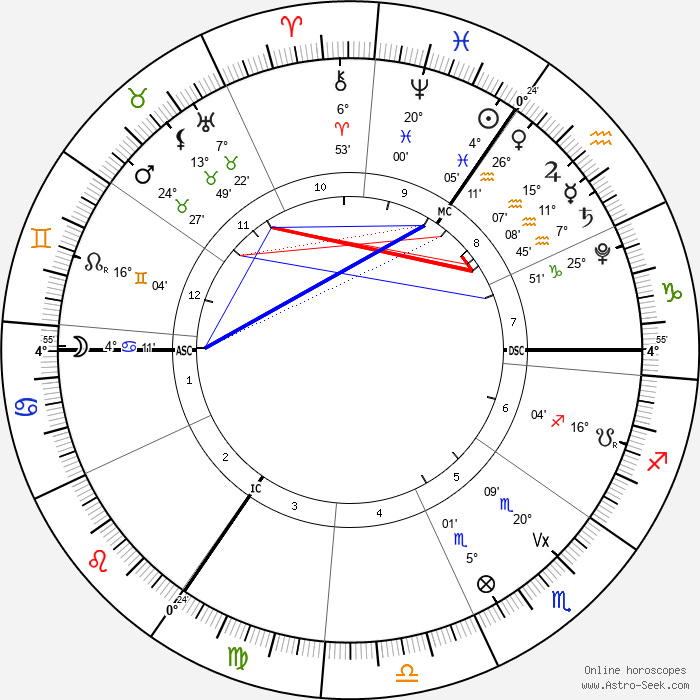
The final hard aspect before our current 2026 window was the waning square of 2021.
Saturn in Aquarius (government mandates, social distance, and centralized digital control) squared Uranus in Taurus (radical disruption of the food supply, supply chains, and the very nature of money/work).
This transit perfectly mirrored the global lockdown era and the subsequent Great Reset. We saw a massive Saturnian expansion of state power and surveillance, while simultaneously experiencing a Uranian explosion in technologies. This was the year of the forced remote work revolution, the supply chain breakdown and the NFT and meme stock speculative frenzy, fueled by the largest saturnian money-printing event in human history.
This 2021 square was the stress test for the systems we are relying on today. It exposed the rot in the traditional banking system and accelerated the move toward a fully tokenized, technology driven future. The inflation we are battling after those years is the direct “hangover” from this square. It’s the bill finally coming due for the distortions created during the pandemic.
Understanding this, we can see that the supportive sextile we’ve enjoyed throughout 2025 was merely a temporary reprieve. As we move toward the March 1st, 2026 expiration of that support, the lessons of the previous cycles will return to the forefront of the global economy.
In Part Two of this report, we will look at how the expiration of the current Saturn-Uranus sextile in March 2026 will shift the markets, and use this cycle to predict the exact nature of the Sentient Economy arriving at the 2031 Conjunction. Make sure you are subscribed so you don't miss it.
Thank you for reading this deep dive into the Saturn / Uranus cycle with me. If you’d like to earn money back on the cost of membership for sharing the publication with someone who might be interested, use the link below.
If you’d like to further support my work and gain insight into your own personal financial astrology, I offer a range of personal Financial Astrology services on my Store.
“The reading was perfection. Just what I was hoping for, a detailed personal interpretation of what happened in my life financially, the good and the bad. Looking at his charts, Rowan was able to explain why it happened and where I am financially at the moment. With this understanding, I know how to prepare and prosper in the future. I came away with a personal plan, not a cookie cutter formula. He is awesome. Could have easily spent another hour!”
- T. Anderson | Screenwriter
Om Shanti,
Rowan Hogg
Financial Astrologer
Disclaimer: This is not financial advice. The author is not a financial advisor. This astrological analysis is for educational purposes only.
Cryptocurrency investments are highly risky and speculative. Always do your own research and consult qualified professionals before making investment decisions.
Astrology is an indicative model and does not claim causative effect. Users bear full responsibility for decisions based on this content, the author disclaims all liability. Astrological insights are interpretive with no assured outcomes.
Great article Rowan. Thank you. Although the supportive Saturn/Uranus sextile came to completion in late January, and it was, what I think, the supportive floor for the general market over the past 10 months from Tariff lows, (S&P has not even had a 5% correction) , I still think the floor continues. The reason I think this, is because we still have a Saturn/Pluto sextile right now over the next month, we have a Uranus/Pluto trine applying, a Neptune/Pluto sextile, a Neptune/Uranus sextile, and Saturn right on Neptune right in the middle of this harmonious aspect. This is incredible synchronicity. And then in July, Jupiter comes to hit these outer planets forming an opposition, trine/sextile to all of these. I think this perfect symmetry from all the outer planets will hold the market from crashing, and dips will be shallow and bought, at least up until the summer. This is why I think the big crash won’t happen until after July, and most likely will crash around the midterm elections. JMHO
I suspect one of the gifts will be a breakthrough in quantum computing. I'm curious to see what you research and interpret on this event!